Editorial 1: Taming Defiant Bugs
Context:
- Antimicrobial resistance (AMR), often also called antibiotic resistance, is a global health challenge and a looming public health crisis.
- The WHO has declared it as one of the top 10 health threats facing humanity.
- Antimicrobials, chemicals, or molecules that kill harmful bugs, are the backbone of modern medicine. Improperly used antimicrobials create selective pressure on bugs.
- The bugs most vulnerable to the drugs die quickly, while the most resilient ones survive, replicate, and become superbugs.
- As a result, AMR occurs when superbugs develop and antimicrobials stop working.
- These bacteria may infect humans and animals, and the infections they cause are harder to treat than those caused by non-resistant bacteria.
- Antibiotic resistance occurs naturally, but misuse of antibiotics in humans and animals is accelerating the process.
- AMR is estimated to cause 10 million deaths annually by 2050, unless concerted actions are initiated now. It will result in 7.5 % reduction in livestock production and negatively impact the global GDP by 3.5%.
|
Antimicrobial Resistance (AMR)
|
What are the causes of AMR?
- Inappropriate Prescribing: Incorrectly prescribed antibiotics by medicine practitioners contribute to the promotion of resistant bacteria
- Extensive Agricultural Use: In both the developed and developing world, antibiotics are widely used as growth supplements in livestock
- Availability of Few New Antibiotics :The development of new antibiotics by the pharmaceutical industry, a strategy that had been effective at combating resistant bacteria in the past, had essentially stalled due to economic and regulatory obstacles. Antibiotic development is no longer considered to be an economically wise investment for the pharmaceutical industry
- Regulatory Barriers: Even for those companies that are optimistic about pursuing the discovery of new antibiotics, obtaining regulatory approval is often an obstacle
Finding solution for AMR:
- The Covid-19 pandemic has given us a painful reminder of what it means to have no vaccine or medicine to tackle an emerging pathogen. Covid has also taught us that in a global crisis government, industry and society can come together and work together to find solutions.
- It is difficult task as reversing AMR and or finding solutions for it is against natural selection — Darwinian evolution, the process by which we evolved. Therefore, it require the collaborative effort of national and international community as we observed during the time of Covid pandemic
- Tackling AMR and coming up with solutions means navigating complex domains of science and society to develop cross-disciplinary solutions. AMR national action plans (NAPs) have been implemented in several surveyed economies including India for human healt
Nations and global efforts to check AMR?
- India has joined the Global Antimicrobial Resistance (AMR) Research and Development (R&D) Hub as a new member.
(The Global AMR R&D Hub was launched in May 2018 in the margins of the 71st session of the World Health Assembly, following a call from G20 Leaders in 2017. ) |
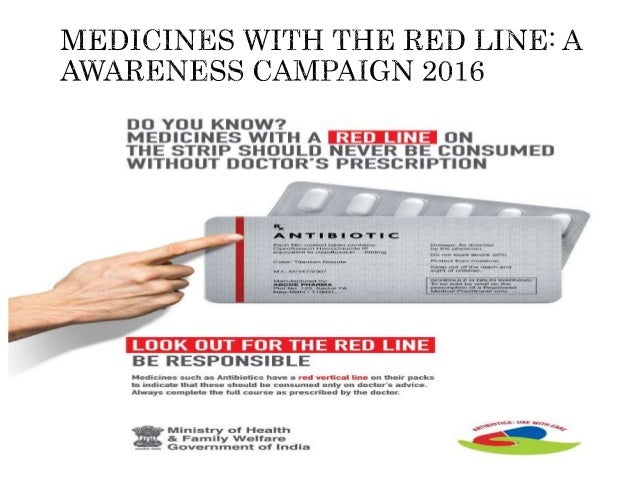
- Implementation of Red Line campaign by the health ministry
- It uses medicines marked with a red vertical line, including antibiotics, without a doctor’s prescription.
- These medicines are called as the ‘Medicines with the Red Line’.
- To check the irrational use of antibiotics, the ‘red line’ will helps the users to differentiate them from other drugs.
- The World Health Organization Global Action Plan on AMR (2015) provides a road map to tackle antimicrobial resistance, including antibiotic resistance
- The WHO “AWARE Tool” : It classifies antibiotics into three groups:
- Access — antibiotics used to treat the most common and serious infections
- Watch — antibiotics available at all times in the healthcare system
- Reserve — antibiotics to be used sparingly or preserved and used only as a last resort
- One Health Global Leaders Group on Antimicrobial Resistance (AMR) launched by United Nations Tripartite organizations : (WHO), Agriculture Organization (FAO), and the International Organization on Animal Health (OIE)
- It aims to address the misuse and overuse of antimicrobials in humans, animals and agriculture which are the main drivers of AMR.
- Therefore, there is need for the rational use of antibiotics in humans, animals, and agriculture warrants coordinated action in all sectors.
Further steps need to be taken for potentially reversing AMR can be implemented by each one of us individually or collectively at the ground level:
- First, prescription is prevention:
- Disease prevention and wellness are key to public health and thus preventing infections whenever and wherever possible is equivalent to averting resistance.
- We need to spearhead sanitation drives, ensure a clean water supply and support hospital-driven infection-control programmes.
- Reducing AMR also requires prescribing antimicrobials judiciously and only when they are absolutely needed
- Coordination across the animal industry and environmental sectors to prevent the unnecessary use of antibiotics in farms ; this nurtures drug-resistant organisms in our food supply
- More comprehensive vaccination programme: Vaccines are also a powerful tool to prevent infections and have the potential to curb the spread of AMR infections.
- However, immunisation programmes are not comprehensive and exhaustive yet for many infectious diseases.
- Robust surveillance system
- Closely connected with prevention is the development of robust surveillance systems that allow us to detect resistant pathogens of all kinds in the environment and hospitals that would eventually allow containment.
- Increasing invest in research and development through both government and private funding:
- There is an urgent need for a strong pipeline of new antibiotics; an essential component in restoring the balance and ensuring that we have new tools in the fight against AMR.
- Bringing a new antibiotic from basic research through clinical trials takes more than a decade and requires upward of $1 billion.
- However, the profits on these drugs are negligible. Hence, the fourth prescription would be to formulate new types of financial incentives to measure return on investment and measure profitability by the social value of the antibiotic, breaking the conventional link between sales and profits.
- Therefore, we need to bring a collective moral vision to AMR and start thinking of antibiotic/antimicrobial drugs as limited resources that should be available to all.
Conclusion:
- AMR is in the air and potentially catastrophic for those burdened by it. Longer hospital stays due to prolonged illness, death and disability are huge financial challenges for those impacted
- The success of modern medicine, women’s health, infectious diseases, surgery and cancer would be at increased risk for lack of working antimicrobials.
- The cost of AMR to the economy is significant and it is critical to develop policies and implement them through a holistic “One Health” approach.

Editorial 2: Imbalance in fertiliser use: Bringing reform in Fertiliser Subsidy
Recent Context:
- Recently, as per Data from the Department of Fertilisers
- There is a 3.7 percentage rise in the sale of urea during April-October 2022 over the corresponding seven months of the previous year.
- There is alarming growth, 16.9 per cent, in DAP sales.
- It shows excessive use and misuse of fertiliser which account the second highest subsidy in the government’s budget.
- Therefore, The Centre is planning to conduct pilots in a few districts of the country on a modified version of direct benefit transfer (DBT) in fertilisers that would establish some connection between land holding and the nutrient’s consumption.
- The intent is to monitor consumption, prevent excess usage and chances of misuse
- However, However, there is significant fall in price of fertiliser after Russia-Ukraine war
- Reduced Prices of urea imported into India (cost plus freight) are ruling at around $550 per tonne, as against $900-1,000 average in November-January 2021-22
- Di-ammonium phosphate or DAP (from $950-960 in July 2022 to $690-700 now)
- Similarly. Phosphoric acid ($1,715 per tonne in July-September 2022 to $1,175), ammonia ($1,575 in April 2022 to $900-975), sulphur ($500-525 in April-June 2022 to $180) and rock phosphate ($300-310 in October-November 2022 to $275)
- Therefore, it is also an opportunity for Indian government to reduce the fertiliser subsidy burden.
Analysing relation between international fertiliser prices tallies with movements in world food prices:
- The United Nations Food and Agriculture Organisation’s Food Price Index hit 159.7 points in March 2022. From that all-time high, the index —which is a weighted average of global prices of a representative basket of food commodities has fallen for nine consecutive months over a base period value 100 for 2014-2016.

The opportunity for central government: The easing of global fertiliser prices has enabled two things
- The first is to significantly improve overall availability:
- No major shortage of any fertiliser, except MOP, has been reported during the ongoing rabi cropping season.
- This wasn’t really the case in kharif 2022 and rabi 2021-22, when soaring international prices and the post-war supply disruptions had made it difficult for companies to contract imports of both finished fertilisers and inputs for domestic manufacture.
- Augmented fertiliser availability, coupled with good soil moisture conditions, has helped boost area sown under rabi crops, especially wheat, mustard, maize and masur (red lentil)
- Reduction in the Centre’s fertiliser subsidy Bill: Central government had budgeted Rs 105,222.32 crore for 2022-23, but the actual outgo could touch Rs 230,000 crore, over and above the Rs 153,658.11 crore spent in the previous fiscal.
- Therefore, reduction in price of fertiliser will result in over reduction of Fiscal deficit of government.
Steps need to be taken to check on excessive use of DAP:
- The first is to restrict DAP use to rice and wheat. All other crops can meet their Phosphates (P) requirement through SSP and complexes.
- The annual consumption of 20:20:0:13 alone is now 50 lt, with Coromandel International (12 lt), Fertilisers and Chemicals Travancore (8.5 lt) and Paradeep Phosphates Ltd (6 lt) being major marketers.
- The danger is of even this well-accepted fertiliser losing out to DAP because of flawed pricing.
- The second is to raise SSP’s acceptance by permitting sale only in granular, not powdered, form. (ingle super phosphate (SSP, which contains 16% P and 11% S).)
- As, SSP powder is prone to adulteration with gypsum or clay. Farmers can be assured of quality through granules, which will also promote slower release of P without drift during application.
- As, SSP powder is prone to adulteration with gypsum or clay. Farmers can be assured of quality through granules, which will also promote slower release of P without drift during application.
What is direct benefit transfer (DBT)?
- DBT, as the wording implies, has to do with transfer of fertiliser subsidy directly into the account of the beneficiaries.
- Fertiliser subsidy arises because the Centre directs manufacturers/importers to sell fertilisers to farmers at a low maximum retail price (MRP), unrelated to the cost of supply, which is much higher. And currently, the difference of which is given to the manufacturing units by the government.
Types of the fertiliser subsidies provided by the Central government:
- Nutrient based subsidy (NBS) policy for decontrolled Phosphatic & potassic fertilizers:
- Under the NBS policy, a fixed rate of subsidy (in ₹per Kg basis) is announced on nutrients namely Nitrogen (N), Phosphate (P), Potash (K) and Sulphur (S) by the government on annual basis.
- The per kilogram subsidy rates on the nutrients are converted into per tonne subsidy on the various P&K fertilisers covered under the policy.
- Any variant of the fertilizers covered under the subsidy scheme with micronutrients namely Boron and Zinc, is eligible for a separate per tonne subsidy to encourage their application along with primary nutrients.
- At present 22 grades of P&K fertilizers namely DAP, MAP, TSP, MOP, Ammonium Sulphate, SSP and 16 grades of NPKS complex fertilizers are covered under the NBS Policy.
- Under the NBS regime, MRP of P&K fertilizers has been left open and fertilizer manufacturers/marketers are allowed to fix the MRP at reasonable rates
- Urea Policy (Pricing and Administration):
- The MRP of urea is statutorily fixed by the Government of India Urea Policy(Pricing and Administration)
- Under the Central Sector Scheme, Urea is being provided to farmers at a statutory notified Maximum Retail Price (MRP) by the government.
- As, Government of India has notified fertilizer as an essential commodity under the Essential Commodities Act, 1955(ECA) and notified Fertilizer (Control) Order (FCO), 1985 & Fertilizer (Movement Control) Order, 1973 under the EC Act.
What are the issues with the Fertiliser subsidies: As availability of fertiliser at lower cost which make it susceptible to misuse and excessive use.
- First, selling price being a small fraction of the cost of supply (1/12 of imported urea and 1/10 of domestic urea) make it vulnerable to misuse by industrial users in India and even to our neighboring countries such as Nepal, Bangladesh, etc. Dubious traders deploy all tactics to divert this material—available at a throwaway price to them (industries and neighbors)
- Second, the system of calculating the cost of making urea for the arriving at subsidy on unit-specific basis protects high cost and inefficient units, even as it doesn’t incentivize low cost, efficient units.
- Moreover, it scuttles innovation by the industry to make better and customized solutions to meet farmers’ diverse needs. Above all, this is far from being conducive to attract investment for growth
- Third, keeping the MRP at a ridiculously low level leads to excessive and misuse of urea:
- It leads to imbalance in fertilizer use (the present NPK use ratio is 6.7:2.4:1 against the desired 4:2:1) and resultant decline in crop yield, deterioration in soil health and adverse impact on the environment and biodiversity.
- Fourth, there is no subsidy cap for Rich farmers:
- As, giving subsidies by ordering sale at a uniform MRP creates an anomalous situation whereby even the better off/rich farmers get its benefit (albeit by default).
- In fact, the quantum of subsidy availed increases in proportion to the quantity of fertiliser purchase— as the scheme doesn’t provide for any cap
- Fertiliser subsides account the second highest subsidies of Central budget after the food subsidy, therefore, non-efficient use of it results in rise in Fiscal deficit of government and non-efficient utilisation of taxpayer money.
- It is also the largest importer of Fertiliser which lead to stress on Balance of payment.
|
The concern issues were highlighted by FY 2015-16.
|
Steps taken by central government to bring reform in Fertiliser subsidy:
- Adhar linked fertiliser subsidy: March 2018, the government has made disbursal of subsidy to manufacturers conditional upon actual sales to farmers and disbursement of fertiliser through on point-of-sale (PoS) machines after undergoing Aadhaar authentication
- In August 2020, the Centre had taken a number of administrative measures viz. restricting purchase of urea to 100 bags (down from 999) per transaction by one purchaser, capping the number of such transactions per month and keeping a tab on top 20 urea purchasers in each of their districts in 22 major fertilizer-consuming states.
- If the farmer still wants to buy extra, those bags would be available only at the nonsubsidized price
- Introduction of Neem coated urea to reduce it diversion in non-agriculture activities along with it increases the productivity of crops.
Way forward:
- Farmers’ details need to be be fed on the PoS machines, including the land he/she holds, crop grown, area under cultivation, etc., and distribution of number of bags of fertilizers such as urea, DAP, etc. should be based on it.
- Thee is need to set the celling limit based on land holding of the farmers who get fertiliser subsidies benefits.
- Introduction of DBT to beneficiary (Farmers) directly in place of Manufacturing units in order to increase efficiency of production.
- Therebefore, there is need to end control on MRP and allow manufacturers/importers the freedom to fix retail prices based on the market forces. The subsidy should be directly given to farmers.